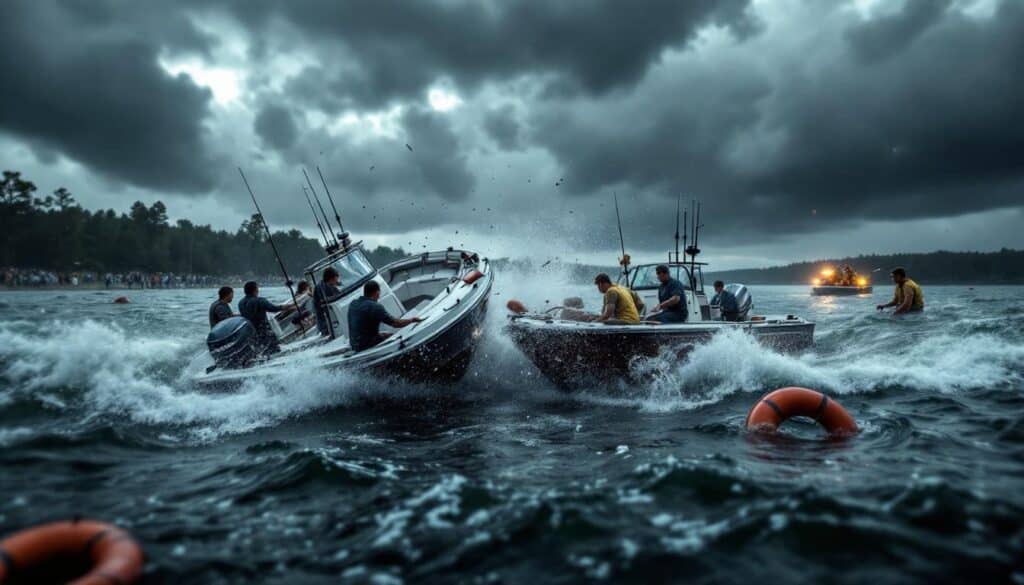



The serene waters of the Long Island Sound have recently witnessed a surge in both recreational boating and the unfortunate incidents that can stem from it. In early 2025, a tragic boating accident unfolded, drawing the attention of numerous investigative and rescue agencies. This incident not only brought immense grief to families but also catalyzed a comprehensive probe into the safety protocols, navigational challenges, and response mechanisms governing boating activities in the sound. Authorities like the Coast Guard, Sea Tow, and the Navigation Safety Council have been at the forefront, deploying advanced Marine Safety Solutions and Rescue Services. The investigative rigor, led by specialized bodies such as the Accident Analysis Group and the Investigative Reporting Bureau, indicates a growing commitment to enhancing Waterway Security. Concurrently, organizations like Maritime Law Associates have begun evaluating the legal frameworks surrounding maritime accidents, propelling efforts to tighten regulations and reinforce accountability. The confluence of these efforts reflects a coordinated approach aiming at maritime safety and prevention of future tragedies.
This article delves into the multilayered investigation following the Long Island Sound boating accident. By exploring the roles of various agencies, the technical and environmental factors contributing to the mishap, and the broader implications for nautical safety, readers will gain nuanced insights into maritime risk management. Furthermore, the article will underscore how technological innovations and legislative reforms are shaping safer navigation experiences in 2025, making this not only a story of a past event but also a manifesto for the future of boating safety in one of America’s vital waterways.
Comprehensive Incident Analysis by Leading Maritime Investigation Teams in Long Island Sound
The immediate aftermath of the accident saw a rapid mobilization of specialized investigative teams operating under the auspices of the Coast Guard and Sea Tow. Their mandate encompassed conducting on-site inspections, gathering evidence, and interviewing witnesses to construct a detailed sequence of events. These efforts were in coordination with the Accident Analysis Group, known for their expertise in dissecting maritime accidents to identify both proximate causes and systemic failures.
The investigative process incorporated:
- Site Assessment: Detailed underwater surveys were performed to assess vessel damage and environmental conditions.
- Data Retrieval: Onboard electronic devices and navigation systems were examined to extract voyage data and speed metrics.
- Witness Statements: Local boaters, rescue personnel, and passengers provided firsthand accounts to reconstruct timelines.
- Weather and Water Conditions Analysis: Utilizing meteorological data alongside tidal and current patterns to understand external influences.
- Regulatory Compliance Review: Ensuring adherence to Maritime Law Associates’ recommended maritime codes and licensing.
One key finding revealed challenges related to the dense marine traffic in parts of the sound, which often complicate navigation and increase collision risks. The Navigation Safety Council has been vocal about this, advocating for stricter routing measures and enhanced marine traffic control systems. The investigative report is anticipated to highlight these recommendations, aiming to influence policy revisions immediately following the incident.
Beyond the technical investigation, the probe will assess the effectiveness of Rescue Services that responded. Early reports suggest a well-coordinated joint effort between multiple agencies, including specialized water rescue units that quickly stabilized injured parties and ensured timely medical evacuation. Such inter-agency collaboration underscores the progress made in Waterway Security protocols, positioning Long Island Sound as a model for emergent maritime safety practices.
| Agency | Role in Investigation | Key Contribution |
|---|---|---|
| Coast Guard | Lead Investigator, Rescue Operations | Coordination of rescue and evidence collection |
| Sea Tow | Salvage and Tow Support | Recovery of capsized vessels and debris |
| Accident Analysis Group | Accident Reconstruction | Detailed cause analysis and reporting |
| Investigative Reporting Bureau | Public Communication | Transparent reporting and community updates |
| Navigation Safety Council | Policy Advisory | Recommendations for enhanced traffic control |
Environmental and Navigational Factors Influencing Boating Safety in Long Island Sound
The Long Island Sound is renowned for its picturesque waters and dynamic marine environment, but it is also fraught with navigational complexities that demand attention from every boater. The accident investigation highlighted several environmental and operational elements that significantly impact safety.
Foremost among these is the sound’s tidal and current behavior, which can abruptly change, challenging even experienced navigators. For example, rapid shifts in tide levels around jetties and narrow channels create unpredictable conditions.
- Tidal Currents: These can cause abrupt changes in vessel handling, especially for smaller craft unfamiliar with local waters.
- Visibility Constraints: Weather events such as fog or sudden rainstorms limit visual ranges, increasing collision risks.
- Marine Traffic Density: With a steady increase in recreational boating, areas near popular marinas see intense congestion.
- Channel Navigation: The presence of jetties and underwater hazards necessitates precise navigation techniques.
- Light and Signaling Systems: Proper maintenance of buoys and beacons is crucial; lapses can mislead vessel operators.
Marine Safety Solutions have begun promoting advanced navigation aids, including GPS-integrated digital charts and real-time data updates through connected services, which allow boaters to anticipate hazards effectively. Enhanced training workshops organized by entities like the Navigation Safety Council emphasize local environmental knowledge critical to preventing accidents.
For instance, in 2024, a pilot program deployed by Sea Tow involved equipping rental boats with augmented reality displays showing live hazard alerts and navigational cues. Initial feedback showed a significant reduction in near-miss incidents, validating the need for technological integration alongside traditional seamanship skills.
| Environmental Factor | Impact on Boating | Recommended Safety Measures |
|---|---|---|
| Tidal Fluctuations | Sudden changes in handling, increased risk near jetties | Boater education, tide awareness apps, heightened caution |
| Traffic Congestion | Collision risk and navigational delays | Mandatory routing plans, speed limits, improved signaling |
| Visibility Issues | Reduced sight distance, delayed reaction times | Use of radar, AIS systems, and fog signal horns |
These insights contribute to ongoing legislative discussions aiming to integrate environmental risk factors into mandatory boating licenses and certifications. Such measures would ensure that boaters are better equipped to interpret local conditions and navigate safely, potentially averting tragedies like the recent accident.
Legal Challenges and Policy Implications Following the Long Island Sound Boating Accident
Maritime law plays a pivotal role when accidents occur in navigable waters, particularly those involving injuries or fatalities. The involvement of Maritime Law Associates and the Navigational Safety Council highlights a carefully coordinated legal response aimed at evaluating fault, liability, and the adequacy of existing maritime regulations.
Key legal issues arising from the accident investigation include:
- Compliance with Boating Laws: Assessing if all operators held valid licenses and adhered to speed and safety regulations.
- Liability Determination: Establishing accountability among vessel operators, third-party service providers, and regulatory agencies.
- Insurance and Compensation: Navigating claims for damages, medical costs, and loss of life.
- Enforcement of Safety Protocols: Reviewing whether existing protocols were sufficient or require reinforcement.
- Public Policy Reform: Proposing legislative amendments based on investigative findings to elevate boating safety standards.
Historical precedents demonstrate that accidents in the Long Island Sound have spurred regulatory changes. For instance, after a fatal collision in 2018, stricter speed limits and vessel routing measures were introduced. Legal experts now advocate for expanding these rules to include mandatory equipment standards and real-time tracking systems.
Furthermore, agencies like the Investigative Reporting Bureau have played instrumental roles in transparent communication with the public, balancing legal sensitivities with the need for community awareness. Their meticulous documentation and reporting influence public opinion and stimulate legislative action, ultimately aiming to reduce accidents and improve Rescue Services efficacy.
| Legal Issue | Impact | Potential Outcomes |
|---|---|---|
| Operator Licensing | Ensures skill and knowledge levels meet safety requirements | Possible tightening of licensing exams and renewals |
| Liability Assessment | Clarifies fault and responsibility | Improved accountability and deterrent against negligence |
| Safety Protocol Enforcement | Evaluates current practices | Enhanced protocols, including mandatory safety gear |
For further details on the legal aftermath following the recent incident, refer to the investigative insights provided by Maritime Law Associates and the ongoing commentary from the Navigation Safety Council.
Technological Innovations Enhancing Rescue Operations and Waterway Security
In the wake of the boating tragedy, the spotlight has intensified on the evolution of Rescue Services and Waterway Security protocols. Technological advancements have dramatically transformed how emergencies are detected, reported, and handled across the Long Island Sound.
Recent years have seen the integration of next-generation tools such as:
- Real-time GPS Vessel Tracking: Reduces response time by providing precise vessel locations to rescue teams.
- Automated Distress Signaling: Enables immediate alerts to Coast Guard and Sea Tow upon detecting capsizing or critical incidents.
- Drones for Aerial Surveillance: Offer rapid scene assessment, especially in tough weather or challenging terrain areas.
- Augmented Reality (AR) Assistance: Used by rescue personnel to visualize underwater obstacles and plan efficient operations.
- Interagency Communication Platforms: Streamline coordination among Coast Guard, Rescue Services, and local authorities.
The practical outcomes of these technologies were evident during the recent accident response, where the Coast Guard coordinated with Sea Tow and other units to locate victims quickly and manage the capsized vessel recovery smoothly. These capabilities exemplify a paradigm shift in maritime safety where smart technology complements human expertise.
| Technology | Function | Impact on Rescue Services |
|---|---|---|
| GPS Vessel Tracking | Real-time location tracking | Faster response times, improved victim recovery |
| Automated Distress Signaling | Instant emergency alerts | Immediate engagement of rescue teams |
| Drones | Aerial reconnaissance | Enhanced situational awareness, obstacle identification |
| AR Assistance | Operational planning aid | Safety for divers, optimized rescue routes |
| Communication Platforms | Interagency coordination | Smooth resource deployment, mission success |
Looking ahead, ongoing collaborations between Marine Safety Solutions firms and government bodies aim to deploy smart buoys equipped with sensors to monitor water quality, traffic density, and emergency indicators in real time. These innovations promise a safer, more secure maritime experience across Long Island Sound.
Community Impact and Ongoing Efforts to Improve Boating Safety in Long Island Sound
The repercussions of the boating accident resonate beyond immediate rescue operations and legal investigations, deeply affecting the local boating community and stakeholders. Public safety campaigns, training sessions, and awareness programs have surged in response to the tragedy, spearheaded by local authorities in collaboration with the Navigation Safety Council and the Investigative Reporting Bureau.
Community engagement initiatives include:
- Boating Safety Workshops: Targeting both novice and experienced boaters to reinforce essential skills and regulatory knowledge.
- Public Forums: Providing platforms for families affected by the accident and community members to voice concerns and suggestions.
- Volunteering Opportunities: Mobilizing local boaters to support Search and Rescue drills organized by Sea Tow and Coast Guard.
- Enhanced Communication Channels: Disseminating real-time safety alerts and updates via social media and dedicated mobile apps.
- Collaboration With Schools: Integrating maritime safety into local educational curriculums to foster awareness from a young age.
The cumulative efforts have also encouraged the adoption of strict boating regulations, including mandatory life jackets, alcohol consumption limits, and emergency preparedness protocols. These reforms have garnered support from maritime advocacy groups emphasizing sustainable Waterway Security.
| Community Activity | Purpose | Outcome |
|---|---|---|
| Safety Workshops | Improve boating competency | Reduction in accidents and near misses |
| Public Forums | Enhance transparency and responsiveness | Stronger community trust |
| Volunteer Support | Augment rescue capacity | Improved response times and coverage |
| Real-time Alerts | Increase safety awareness | More informed boating decisions |
| Educational Programs | Promote lifelong safety culture | Better prepared future boaters |
To remain informed about ongoing developments and community safety initiatives, readers can follow updates from the Investigative Reporting Bureau and recent detailed coverage by the Navigation Safety Council. Social media also plays a vital role in the outreach, as demonstrated by local safety advocates on platforms like
Frequently Asked Questions About Boating Safety and Investigations in Long Island Sound
- What agencies are involved in investigating boating accidents in Long Island Sound?
The Coast Guard, Sea Tow, the Accident Analysis Group, and the Investigative Reporting Bureau lead investigations, with guidance from the Navigation Safety Council and legal perspectives from Maritime Law Associates. - What environmental factors contribute most to boating accidents here?
Tidal fluctuations, dense marine traffic, and occasional low visibility due to weather are significant contributors. - How are rescue operations managed during boating emergencies?
Rescue Services coordinate through real-time GPS tracking, drones, and integrated communication platforms to optimize response and victim recovery. - What legal changes might arise after this accident?
Likely reforms include stricter licensing requirements, mandatory safety equipment, and enhanced enforcement of boating regulations. - How can local communities help improve boating safety?
Participation in safety workshops, volunteering for search and rescue exercises, and promoting awareness through education and social media platforms are vital ways to contribute.